
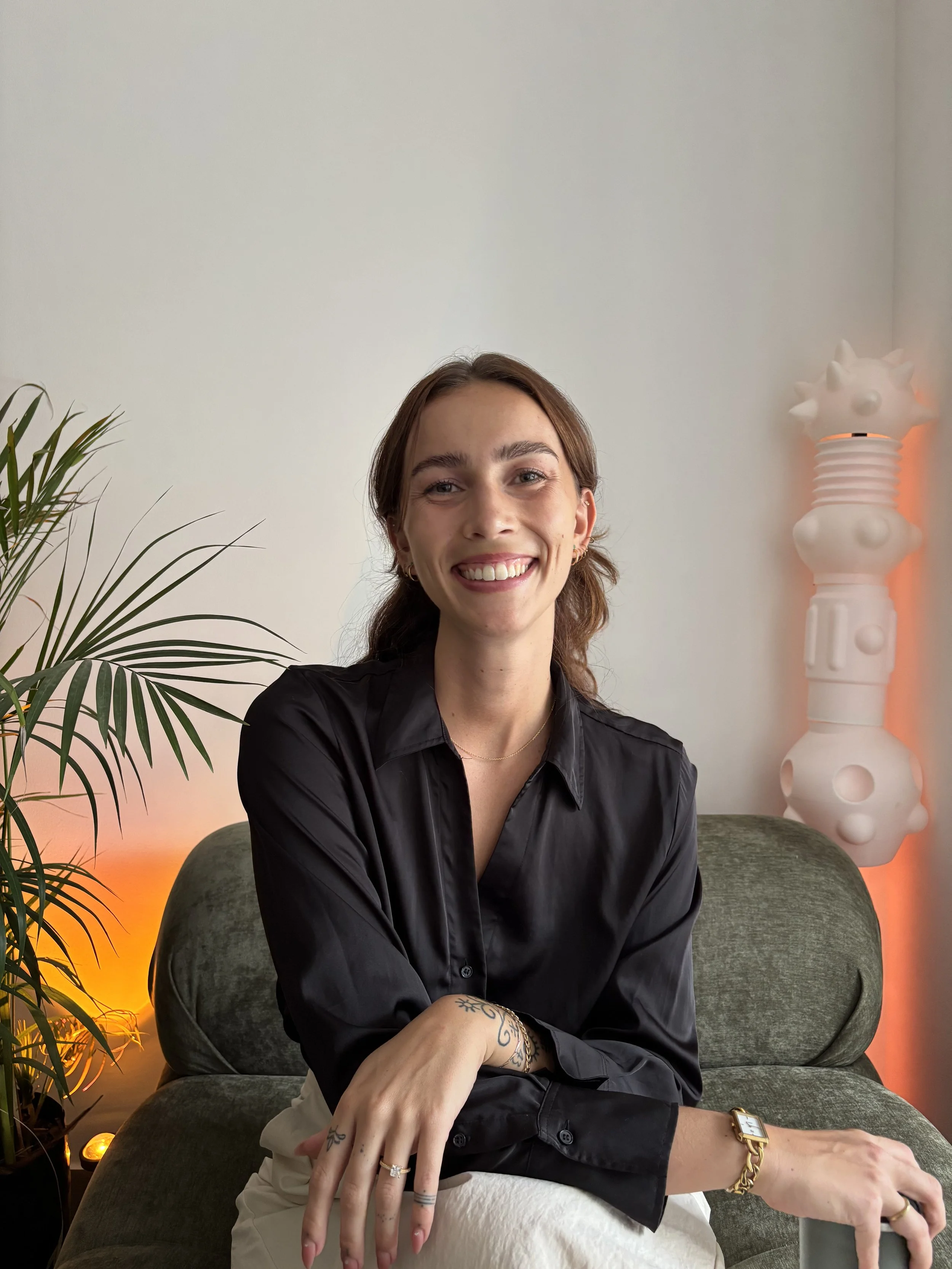
About me
I am a certified sexologist and relationship therapist, and I am currently completing a BSc in Psychology at Kings College in London.
My professional interests include relationships, sexuality, intimacy and the ways our cultural and familial backgrounds influence how we relate to ourselves and to one another.
My aim is to offer a therapeutic space where you can explore your experiences openly, gain a deeper understanding of yourself and your relationships, and work towards changes that feel meaningful and realistic in your life.

Professional background
Before becoming a therapist, I worked for five years as a sexual health and wellbeing advisor in two specialist stores in Denmark. In this role, I guided customers on topics such as sexuality, pleasure, sexual products, and individual needs.
This experience gave me a broader understanding of how many aspects of our lives are influenced by sexuality and the role it can play in our overall wellbeing, sense of self, and relationships. It also taught me to speak naturally and openly about sexuality, even when conversations involved personal, sensitive, or often taboo topics.
For the past two years, I have been working independently with individuals and couples, supporting them with concerns related to relationships, sexuality, intimacy and personal development. Alongside this work, I have also been volunteering as an online counsellor for the Danish NGO UngTilUng, where I provide confidential support to young people experiencing personal or emotional difficulties.
My professional background combines sexology, relationship therapy and psychology. I have a particular interest in developmental psychology and neuropsychology, including how early experiences, relationships and emotional patterns can continue to influence us throughout life.
Attachment theory, particularly the work of John Bowlby and Mary Ainsworth, is an important part of my therapeutic perspective. It can help us understand how our early experiences of closeness, safety and connection may shape the ways we relate to ourselves and others as adults.
Alongside my formal education, I regularly take shorter courses to expand my knowledge and continue developing my therapeutic practice.
-
My work is guided by three central principles. Together, they create a therapeutic space that combines understanding and compassion with direction, responsibility and the possibility of meaningful change.
-
I believe that meaningful change requires both compassion and responsibility. In therapy, I meet your experiences with care, understanding and respect, while also supporting you in taking responsibility for the areas of your life that are within your influence.
Responsibility does not mean blame, nor does it mean that everything that has happened to you was within your control. It means recognising the choices and possibilities available to you moving forward.
Together, we define what you want to achieve through therapy and explore realistic steps that can help you move towards those goals.
-
Thoughts and explanations are important, but they do not always tell the whole story. Our emotions and physical responses can also provide valuable information about our needs, boundaries and experiences.
Depending on what feels relevant and comfortable for you, our work may include both conversation and attention to what you notice emotionally and physically. The aim is to connect intellectual understanding with how change is felt and experienced in your everyday life.
-
No single therapeutic approach works for everyone. I draw on perspectives from sexology, relationship therapy and psychology and adapt our sessions to your experiences, background and goals.
My role is not to provide a fixed answer for how you should live, but to help you understand yourself more clearly and identify possibilities for meaningful change.
How I work

I am originally from Denmark and have lived in Mexico for four years. I am married to a Mexican man, and together we have a son.
Living in another country and building an international family have given me a personal understanding of how deeply culture can shape both our relationships and our sense of self. Culture is not limited to nationality. It is also present in the values, expectations, communication styles and relationship patterns we inherit from our families and the environments in which we grow up.
Meeting a different culture can make us more aware of the parts of ourselves that previously felt natural or unquestioned. It can raise important questions about identity, belonging, personal values and how to remain connected to yourself while also being open to change.
These experiences have strengthened my interest in the deeper emotions that can accompany relationships and major life transitions, including grief, uncertainty, loneliness and the fear of losing yourself. They have also shown me the importance of self-worth, mutual respect and honest communication when navigating change and personal development.
In intercultural relationships, this may involve respecting a partner’s background while creating space for both people to remain connected to who they are and where they come from. More broadly, it is about understanding what has shaped you, deciding what you want to carry forward and creating a life that reflects your own values.